Building a culture that embraces, not fears, uncertainty – LexisNexis
A resilient and adaptive culture is now essential for mid-sized law firms. This article explores how leaders can turn uncertainty into an advantage, strengthening collaboration, resilience and, ultimately, how to build trust with customers in a shifting market.
Mid-sized firms are operating in an environment where unpredictability is the new constant. Economic volatility, uneven regional growth, tight resourcing and evolving client expectations are increasing pressure on traditional operating models. Yet the firms that thrive are those that treat uncertainty as strategic fuel. Research such as the LexisNexis Bellwether Report 2025 shows a widening performance gap between firms that adapt quickly and those that hold tightly to legacy processes. The imperative is clear: building resilient law firm culture is now a core leadership priority.
Why uncertainty can strengthen culture
Mid-sized firms often assume that uncertainty erodes confidence, stability and performance. But in practice, uncertainty can act as a catalyst for creating a positive law firm culture built on transparency, shared purpose and collaborative problem solving.
MD Communications’ industry-wide study found that 95% of legal organisations consider workplace culture “very important” or “important” to business success. Their report positions culture as business-critical because it determines how people respond when pressure rises, workloads spike or client demands shift. When teams understand that ambiguity is normal rather than exceptional, they develop the mindset and processes required to navigate it confidently.
PwC’s Law Firm Survey 2025 reinforces this point, noting that the ability to execute change at pace is now synonymous with competitiveness. They highlight that simplification, automation and decisive leadership are becoming essential capabilities. For mid-sized firms, this means equipping people with the clarity, confidence and communication needed to handle unpredictability. It also strengthens how to build trust with a client, as clients increasingly value firms that demonstrate agility, stability and proactive thinking.
Reframing uncertainty as strategic opportunity
Uncertainty often creates hesitation for firms outside the top 200, particularly when operating across multiple offices with limited infrastructure. Yet data from Pirical Legal Professionals highlights how regional demand patterns are shifting and how talent distribution is broadening beyond London. This provides clear lessons in adaptability for firms wanting to diversify or expand into emerging markets.
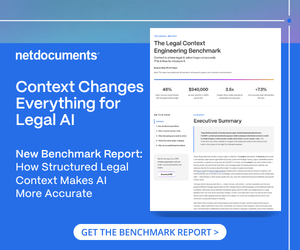
The data equips leaders to turn uncertainty about where growth will occur into actionable decisions around recruitment strategy, specialist practice development and office investment. It also enhances how to build trust with customers by showing that the firm not only understands market fluctuations but is already acting on them. Transparent decision making strengthens confidence across both internal teams and external clients.
Embedding adaptability into firm-wide planning also supports fostering well-being legal culture. Fee-earners who feel supported through periods of change are more engaged, more confident and better positioned to deliver consistent, high-quality work. This reduces operational friction and advances a collaborative work culture in law firms, helping teams respond collectively rather than individually to shifting workloads.
Practical strategies for adapting law firm culture
To build a culture that embraces uncertainty, mid-sized firms can prioritise four practical shifts.
Clarify purpose and expectations
People handle ambiguity best when they understand what the firm is trying to achieve and how their role contributes to it. By setting out clear decision-making principles, leaders reduce anxiety and build alignment. This supports building trust with customers, as client-facing teams communicate with confidence even when circumstances are fluid.
Invest in technology that supports transparency and pace
Digital tools streamline workflows, reduce bottlenecks and give leaders visibility of performance patterns. PwC’s findings highlight that automation is now a strategic enabler, not an optional add-on. Technology ensures that uncertainty does not translate into operational inconsistency or reduced service quality. Tools such as Lexis+ AI™ streamline routine research and drafting, helping teams focus on higher-value advisory work. Get access to fast and accurate generative legal AI. Transform your legal workflow today with Lexis+ ™.
Embed psychological safety and wellbeing
When fee-earners feel safe to surface risks, raise concerns or ask for guidance early, the firm navigates uncertainty more effectively. Building resilient law firm culture is not only about systems; it is about mindset, trust and accountability. Leaders should model openness, normalise feedback loops and make workload sustainability a formal strategic priority.
Use data to inform decision making
Mid-sized firms often hesitate to make bold moves due to limited market insight. External market research, such as Pirical’s analysis of the UK legal market, combined with internal data sources like time recording, pricing performance and practice profitability, can provide the confidence required to act decisively. When the firm demonstrates that decisions are evidence-based, it strengthens fostering trust in law practice and helps clients see the firm as a proactive partner.
A new leadership mindset for the mid-law environment
For managing partners and practice heads, embracing uncertainty means shifting from control to clarity. Rather than trying to eliminate unpredictability, leaders can equip teams to respond to it intelligently. The Bellwether Report 2025 notes an increasing recognition that sustainable growth requires innovation in pricing, resourcing and service delivery. Mid-sized firms that cultivate adaptability are better placed to win complex work, retain talent and reassure clients that they can deliver certainty even when the environment is volatile.
This mindset also builds competitive differentiation. Clients increasingly ask how firms manage risk, ensure continuity and maintain quality when external conditions fluctuate. A culture built on openness, collaboration and informed agility becomes a visible client asset. It strengthens building trust with customers at every touchpoint.