
Designing under pressure: what tight deadlines really reveal – Epigram
When deadlines suddenly tighten, what actually determines whether design delivery holds up?
Raw speed, or the systems behind the work?
The reality of “urgent” work
In legal marketing, urgency is rarely a surprise. Pitches land with little warning. Priorities shift. Opportunities appear and suddenly everything needs to happen now.
It’s easy to assume tight deadlines are a creative challenge, can the agency move fast enough? But in our experience, they’re usually a systems challenge.
When time disappears, so do good intentions. What’s left is how clearly work is briefed, who’s making decisions, what’s already been thought through, and where designers are trusted to use judgement. Those foundations matter far more than any last-minute push.
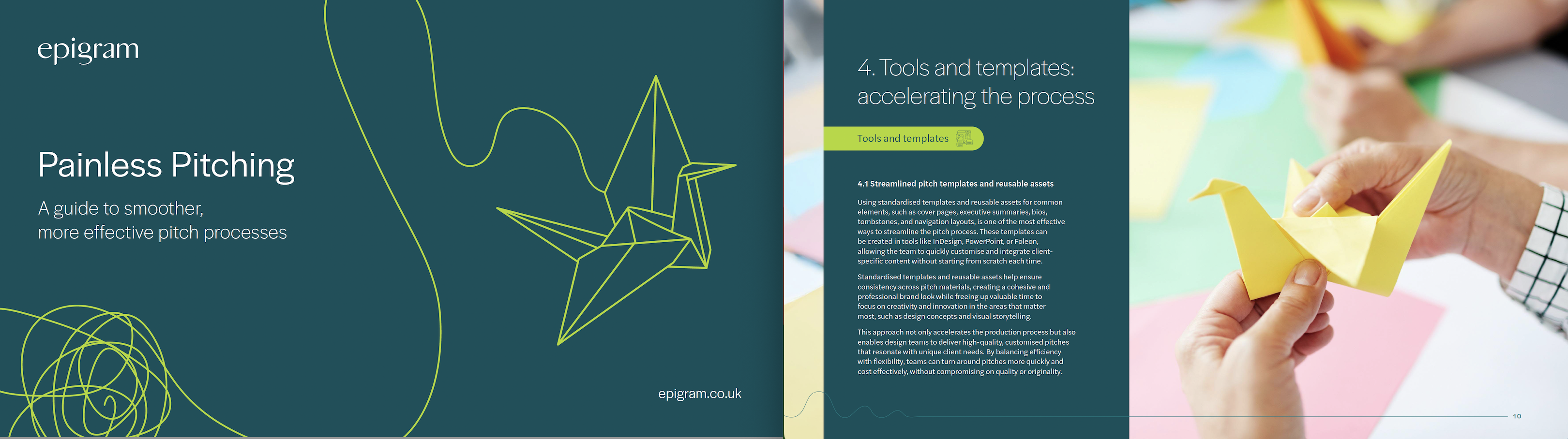
That’s exactly why we developed our Painless Pitching report. Not to talk about better-looking decks, but to explore the practical, human realities of pitching under pressure, and how to make the process feel calmer, clearer and more efficient for everyone involved.
What pressure tends to expose
When timelines shrink, a few things become obvious very quickly. Teams either move smoothly or they don’t. Brand consistency either holds up or it starts to slip. Designers either know what to focus on, or spend valuable time second-guessing decisions that should already be settled.
One of the clearest takeaways from Painless Pitching was that tight deadlines don’t create problems; they highlight the ones that were already there. Unclear roles, too many feedback loops, and decisions landing too late all become far more visible when time is limited.
If every job starts from scratch, urgency becomes exhausting. If everything is locked down, it becomes frustrating. The sweet spot sits somewhere in between.
What this looks like in practice
We see this most clearly in high-stakes pitch work with next-day deadlines.

In one recent example, a client needed a senior-level presentation turned around overnight. What made it possible wasn’t last-minute heroics, but a follow-the-sun approach with UK and APAC teams picking work up in sequence, clear visual rules that everyone understood, and agreed boundaries around what could flex and what couldn’t.
The pitch landed well. But the more important outcome came afterwards. That live deck became the basis for a self-serve PowerPoint template, giving the team a faster, calmer starting point for future pitches and reducing pressure the next time a tight deadline came along.
It reflects one of the core ideas behind Painless Pitching: fix the system once, rather than firefighting every time.
Why templates matter more when things get tight
Templates often get a bad reputation. They’re sometimes seen as restrictive, or as a shortcut. In reality, they’re one of the most effective tools for managing pressure.
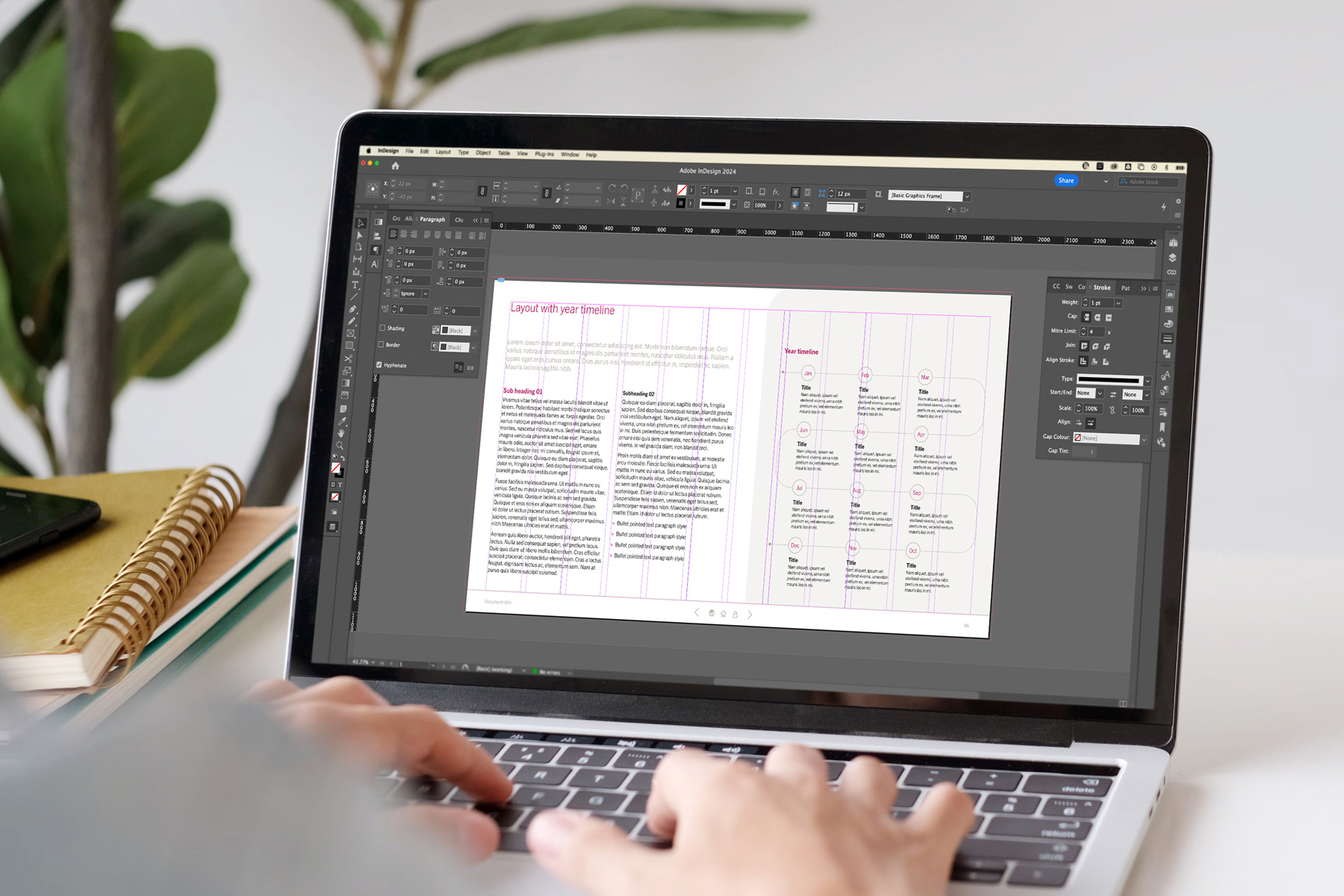
From our experience building self-serve templates across PowerPoint and InDesign, the best ones take low-value decisions off the table, protect the brand when there’s no time to second-guess, and build in good judgement around hierarchy and emphasis.
This thinking sits at the heart of Painless Pitching, where reusable assets and clearer roles consistently reduced stress and turnaround time.
It’s also why templates work so well for ongoing thought leadership programmes, where speed, consistency and senior credibility all matter. A good example is the Linklaters Outlook series, where tightly structured templates support efficient delivery across multiple editions without diluting the brand or the thinking behind it.
The key point is that the most effective templates aren’t generic. They’re shaped by real work, tested under pressure, and refined to reflect how teams actually operate day to day.
Making global delivery feel joined up
Working across time zones only really works when judgement is shared.
That means clear design intent, agreed decision-making boundaries, and templates and tools that guide rather than constrain. It’s why the practical tools that sit alongside Painless Pitching focus just as much on people and communication as they do on process.
When that clarity is missing, global delivery can slow things down. When it’s there, it quietly does the opposite.
What this means for legal marketing teams
Urgency isn’t going away. If anything, it’s becoming normal.
So the more useful question isn’t “How do we move faster next time?” It’s “What would make the next urgent job feel easier?”
Usually, that comes down to having strong pitch and presentation templates, reusable visual systems that actually get used, clear ownership between BD, marketing and design, and a delivery model that scales without adding stress.
When those pieces are in place, pressure doesn’t disappear, but it becomes far more manageable.
A final thought
Tight deadlines don’t create problems. They reveal them.
The strongest brands aren’t the ones that only look good when there’s time. They’re the ones that still feel confident, coherent and human when there isn’t.
Want to explore this further?
If you’d like a free copy of our Painless Pitching report, or access to the practical supporting tools that sit alongside it, including efficiency tips, role allocation guidance and pitch checklists, just get in touch. We’re always happy to share what we’ve learned and talk through how these approaches might work in your own team.